
Grief is not democratic
We mourn what mirrors us.

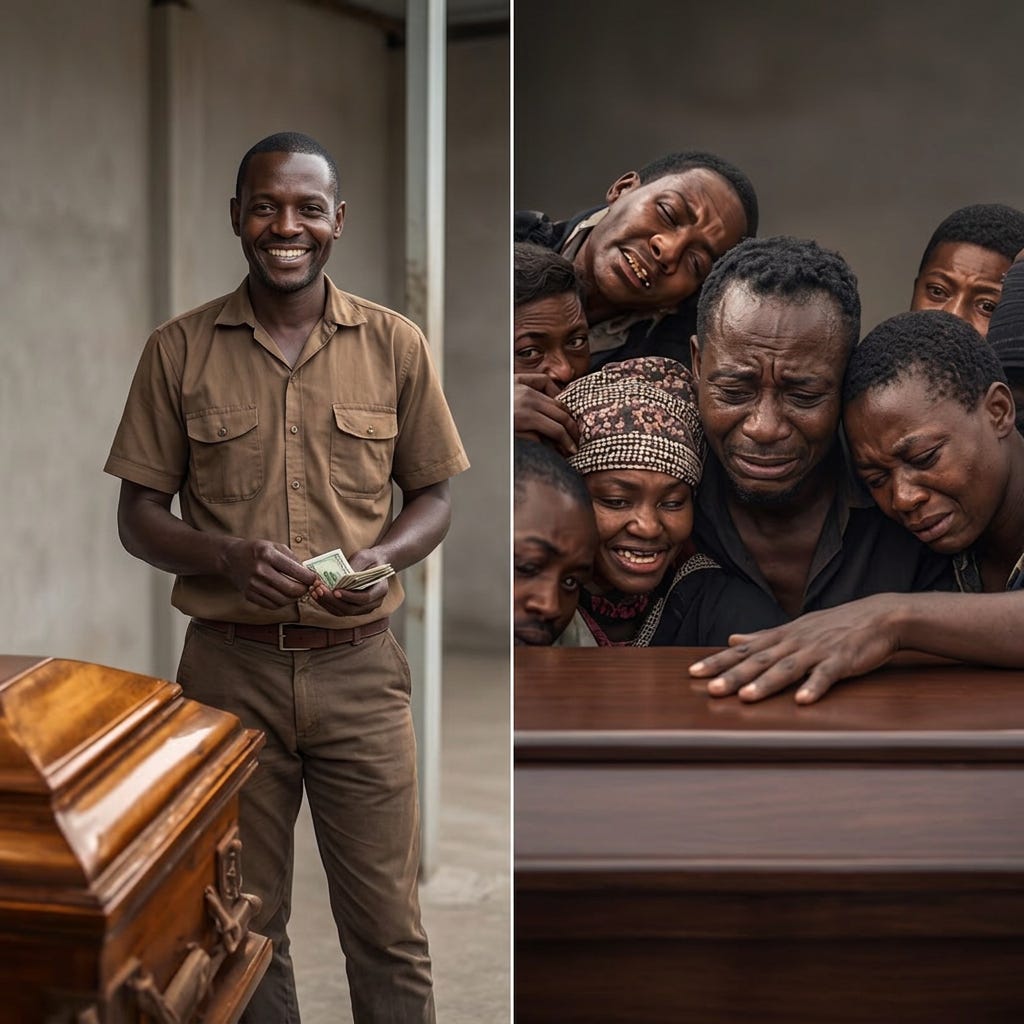
Why is it always the brilliant lights that extinguish young and die badly? I can’t keep up with the stories I have encountered of brilliant young people, all promising, hoarding every cliché that spells a bright future and then they die, often stupidly and mostly cruelly. Their deaths are so unjust that the instant response is rage that quickly gives way to resignation. I have been asking this question all my life and still do every time a bad death is brought to my attention.
I was barely five when my uncle Apollo died. He was my father’s youngest brother and the first of a generation to seek higher education in Europe. He was training to be an architect. Brilliant, tall, kind, bold, progressive and stylist. This was a young African into gymnastics in the 70s and that’s where death found him, in the gym, staying in shape. My sister described the depth of the sorrow. They wailed for Apollo. Not him. Not our best, our finest, the coolest cat we had ever seen. Gone. He was 25.
I was too young to remember meeting him but I grew up with his pictures and his stories. His name endured through two generations and we always had his grave. No one ever explained how to make sense of it and I took the Christian view. That God takes his best early. It is what I heard throughout all the eulogies of sudden deaths of the young and brilliant. Or that they were restless souls and the ancestors called them back. All of these explanations tried to bring meaning to tragedy but none of them sat well enough.
I applied the same logic to tragic heroes who paid the ultimate price and many of those individuals have stayed with me over the decades. I am talking about men I had never met but I gave their deaths meaning, for their existence had influenced my outlook of life.
I still think about Tupac Shakur. He was 25 when he died in a drive-by shooting. I don’t consider him the greatest rapper to have ever lived but his gift was unmistakable and the world recognised his talent, even those not into hip hop. He was three years older than me when he died and I remember being shocked at the injustice of it all. Here I was in Nairobi mourning a hip hop artiste, literally across the world, who I had never met. The day the news broke, I was genuinely sad and I was not alone in my sadness.
I felt the same sadness when E-Sir, South C’s finest, died at 21 in a road accident. He was lyrically gifted and a poster boy of a city that was discovering its own voice. I had never met him, even though I wrote about urban culture in the same city he was making his mark and I mourned E-Sir like he was a kid bro.
Then there was James Ochola Odhiambo,aka Jordoo. He was a uni student, 24 and in his final year in USIU when he was shot in the streets of Nairobi in a case of mistaken identity. He was a contemporary during my college years. I knew his mother. He died ugly and the injustice of it all turned him into a tragic hero for my college peers. I never imagined a mother could ever recover from a loss of that nature.
I have a long list of men of renown that I regularly pay tribute to. Nationalists who died before I was born but my attachment to their deaths must have something to do with the cruel manner in which their brilliance was extinguished and their youthfulness.
Pio Gama Pinto was 37 when he died from an assassin’s bullet. When I was in my 30s, I used to work around the Sarit Centre in Westlands in Nairobi and would walk past the road named after him almost daily. I never really appreciated his revolutionary significance until I found out during a writing research venture, that Pinto and Malcolm X were kindred spirits and that Pinto had persuaded Malcolm to move beyond black nationalism to a broader Pan African solidarity. They died just three days apart, both by an assassins’ bullet in February 1965. February is my birth month and I made a bigger deal of that connection than I probably should.
They weren’t the only ones. There was Walter Rodney. Assassinated at 38. Tom Mboya gunned down at 38. Dedan Kimathi, hanged at 36. I have mourned these symbols of liberation throughout my life as a journalist. I know their death anniversaries and they often served as mascots in my renditions of what Kenya, Africa, could have been if they weren’t erased so early.
When Kelvin Kiptum set a new world marathon record in Chicago bringing it within a whistling breath of a sub 2 hour marathon, I vowed to watch him race in Rotterdam the next year, where it was predicted he would break his own record and achieve the herculean sub 2 hour marathon feat. I had written about Eliud Kipchoge after he broke the world record in Berlin and tracked him through to Vienna during the successful INEOS 1:59 challenge. I was in that crowd of journalists when Eliud famously said, “ This is about history and leaving a legacy”. Kiptum, coming to Rotterdam while I was resident in the Netherlands, felt like celestial alignment. The Rotterdam marathon was scheduled for April. Kiptum died in a car accident in February. He was 24 years of age.
I have reflected on this for a long time. Why do certain memories stick and while many others, I can barely recall? Is it because these individuals in my ledger were unicorns? Young people die all the time. How many young women do we lose regularly in Kenya, and why haven’t a more significant number made my list?
I thought about this as I read the recent tragic news report of a school dormitory fire that killed sixteen young girls at Utumishi Girls Academy in Kenya. The familiar feelings arrived. The rage and the grief and then they drift in the way feelings do when they find nothing to anchor to. They may have been brilliant and young and they were most certainly innocent but none of that could protect them from a most cruel fate. The only reason the country is even talking about them is because of how badly they died and the raw emotion on display that tore their loved ones apart. But I doubt I will remember them and hold their memories sacred as I do for Pinto, Kiptum and Jordoo.
Yet, these young girls were somebody’s Apollo. They have mothers, fathers and siblings who must have wailed for them like my family wailed for my uncle. Even though it is my role as a grief writer to see patterns, I am unable to hold their deaths with the same fierce sacredness I hold for my uncle.
Grief, after all, is not democratic. We mourn what mirrors us. My ledger is full of deaths that are reminders of the fullness of life I have wanted to embrace and the parts of myself that had died along the way. I recognise myself in their unlived futures.
There is a single black and white image of my uncle Apollo, that hung in my grandparents house for decades. In that picture he wore tapered trousers that flared at the bottom, a shirt with long lapels and large collars, his neck down to his sternum exposed and he sported a huge Afro. It is not a smiling picture. Pensive, would be closer to it. I can still see a distant sadness in his eyes that I now acknowledge represents a part of my future that was lost and this is why, I recognise this loss everywhere I look.
You may now purchase my book Strength and Sorrow HERE.
Strength and Sorrow by Oyunga Pala is now available for purchase on Amazon for the Kindle and Paperback HERE.
Correction, Oyunga. Tupac Amaro Shakur WAS the greatest American rapper that ever lived.
But very poignant this is, as usual.